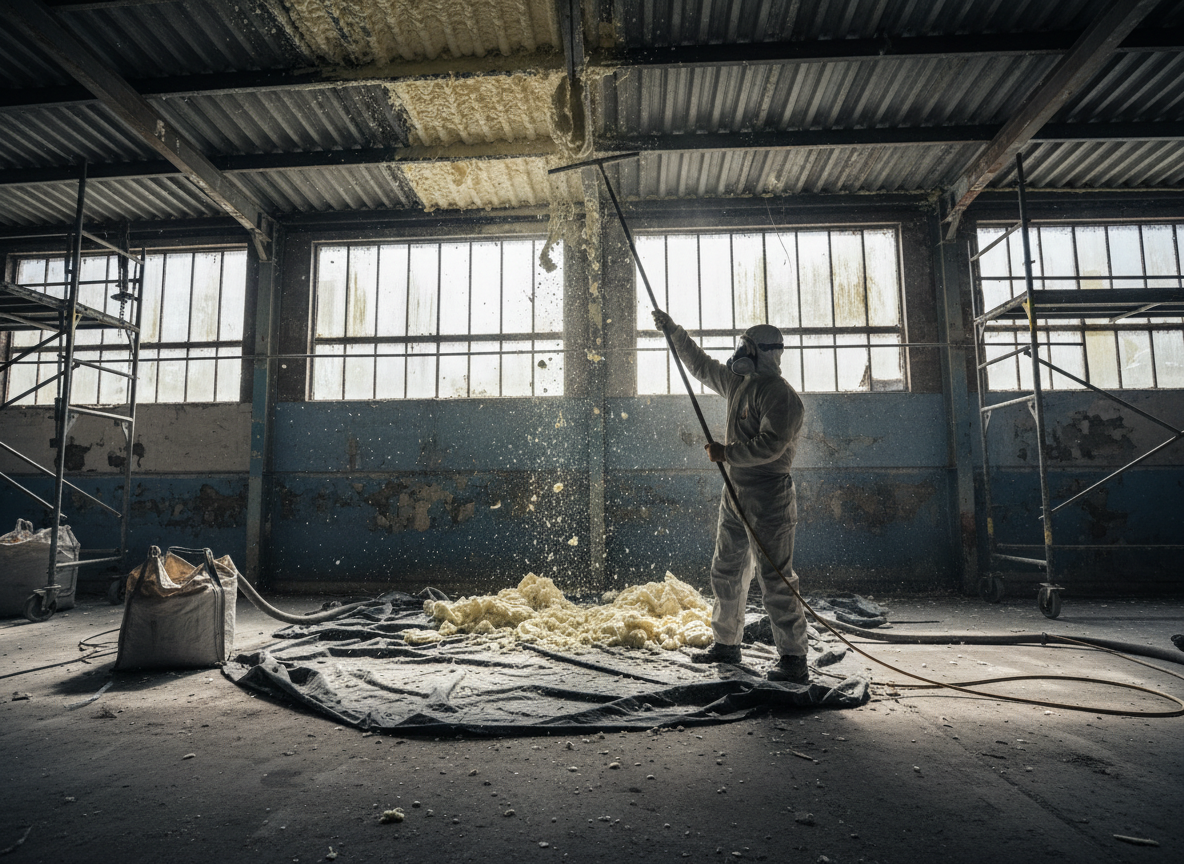
Warehouses in the Scunthorpe area often feature steel portal frames and concrete floors where spray foam was applied decades ago for condensation control. Removing it requires careful sectioning to avoid damaging purlins or releasing fibres into the open volume above racking. Local weather adds moisture that can make the foam brittle in winter or sticky in summer, changing how crews section and bag material on site.
Edge cases include foam applied over older cladding joints along the A18 corridor where thermal bridging created thicker build-ups. Crews must isolate power to lighting and conveyor systems before starting, then use negative pressure setups to keep dust from drifting into adjacent bays still in use. Waste must be transported to licensed facilities rather than general skips, a step that lengthens timelines on larger units near the steelworks.
Regulation notes cover the need to check for mixed insulation layers common in 1970s–1990s buildings around Lincolnshire. Partial removal often leaves hidden pockets behind service runs that later cause staining on new linings. Full extraction followed by substrate inspection prevents callbacks when the building is re-let or sold.
Waste Handling in Lincolnshire
All removed foam and contaminated debris is double-bagged on site then taken to approved transfer stations serving the Scunthorpe postcode area. This avoids fly-tipping risks on rural lanes and keeps the job compliant with local environmental rules.
Technician insight
In Scunthorpe, the thing that catches most people out with Warehouse spray Foam removal is the older steel sheds along Doncaster Road where foam was sprayed directly onto riveted joints. Moisture from the Trent valley makes those layers delaminate unevenly, so crews end up chasing hidden pockets behind purlins that homeowners never expect.
Gunness warehouse re-fit
Foam on the north elevation had started shedding flakes onto stock. Inspection showed it was bonded over original bitumen coating. We sectioned the material in strips, contained the dust, and cleared the space over two nights so daytime operations could resume without interruption.
How it works
- 1
Site Assessment
Walk the warehouse with the client to map foam depth, access points and any mixed materials before quoting.
- 2
Containment Setup
Install dust barriers and negative air units to isolate the work zone from active storage or production areas.
- 3
Sectional Removal
Cut and bag foam in manageable pieces while protecting steelwork and leaving substrate clean for inspection.
- 4
Clearance and Disposal
Remove all waste to licensed sites, then vacuum and wipe down surfaces before handing the space back.
Pricing
Cost varies with warehouse size, foam thickness and access restrictions; site visit required for accurate scope.