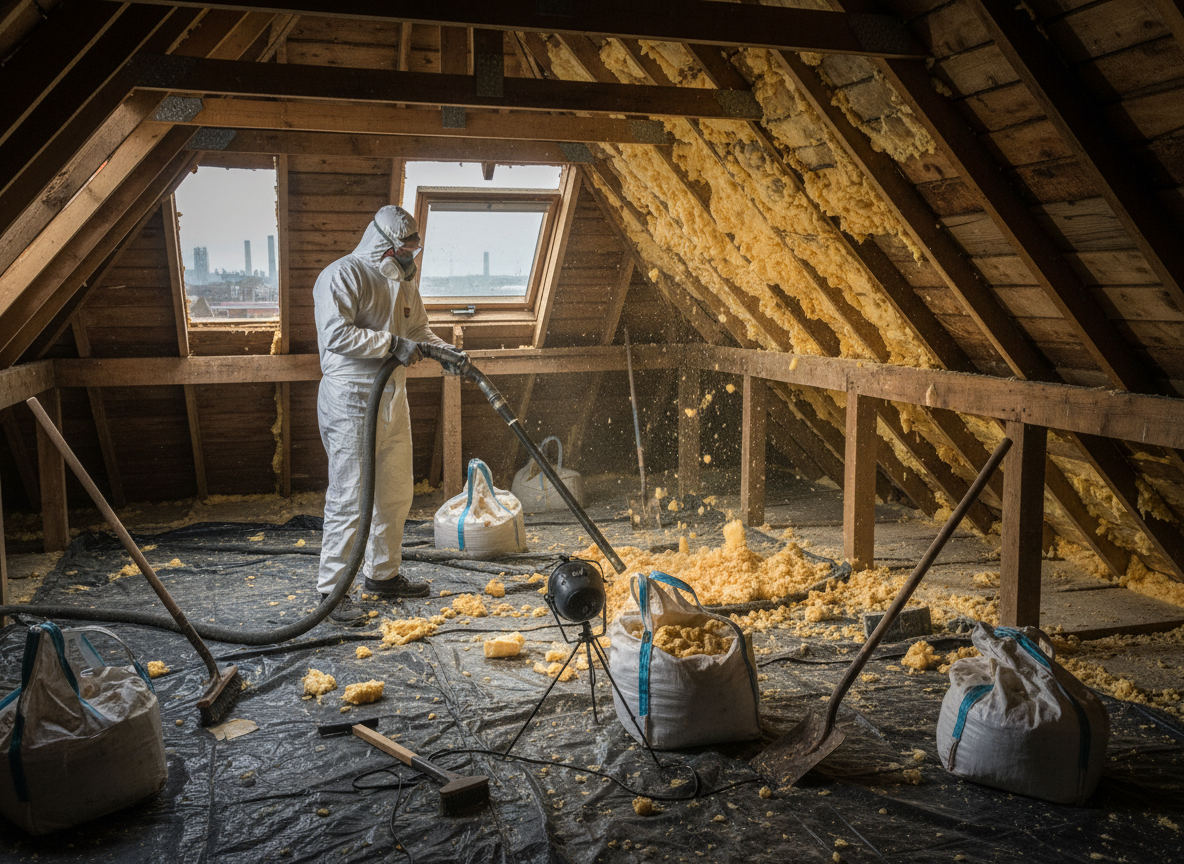
Spray foam in Scunthorpe lofts often bonds tightly to timber in post-war semis and terraces common along the A18 corridor. Removal requires separating the closed-cell material from rafters without tearing vapour barriers or disturbing wiring runs that older Lincolnshire homes frequently have exposed in lofts. Wet winters increase adhesion, so crews start with moisture checks before cutting sections to avoid pulling ceiling plaster below.
Edge cases include foam applied over original mineral wool in 1960s properties near Gunness, where layers trap condensation against the felt. Technicians cut access hatches rather than disturbing ridge tiles, then bag waste on site to prevent dust settling into living spaces below. Lincolnshire Building Regulations require ventilation upgrades after removal, so any new insulation must meet current U-value targets without reintroducing the original moisture trap.
Handling Local Weather and Housing Factors
Scunthorpe's frequent damp spells mean foam removal jobs often reveal rot in ends of joists closest to the eaves. Crews carry extra timber treatment on vans because replacing a single joist in a narrow terrace loft takes longer than open-plan new builds. Soil conditions around the River Trent also raise humidity in ground-floor rooms, so extraction includes checking for rising damp paths before resealing the loft floor.
Technician insight
In Scunthorpe, the thing that catches most people out with loft spray foam removal is how older terraces along the A18 trap moisture from the estuary, making the foam grip joists harder than in drier inland homes and requiring slower, more careful peeling to avoid ceiling damage below.
Gunness Terrace Loft
Homeowner near the A18 reported musty smells after heavy rain. Inspection found closed-cell foam holding water against joist ends. Removed foam in sections, treated affected timber, and improved ridge ventilation. Property now shows no recurring damp odours.
How it works
- 1
Site Assessment
Inspect loft access, foam depth, and any wiring or pipework in Scunthorpe properties before planning extraction routes.
- 2
Containment Setup
Seal stairwell and rooms below with sheeting to keep dust contained during cutting and removal.
- 3
Foam Extraction
Cut and peel sections in manageable pieces, checking for hidden moisture or timber damage as work progresses.
- 4
Cleanup and Ventilation Check
Vacuum residues, dispose of waste, and confirm loft ventilation meets current standards before handover.
Pricing
Cost depends on loft size, foam thickness, and access difficulty; upfront quotes provided after inspection.