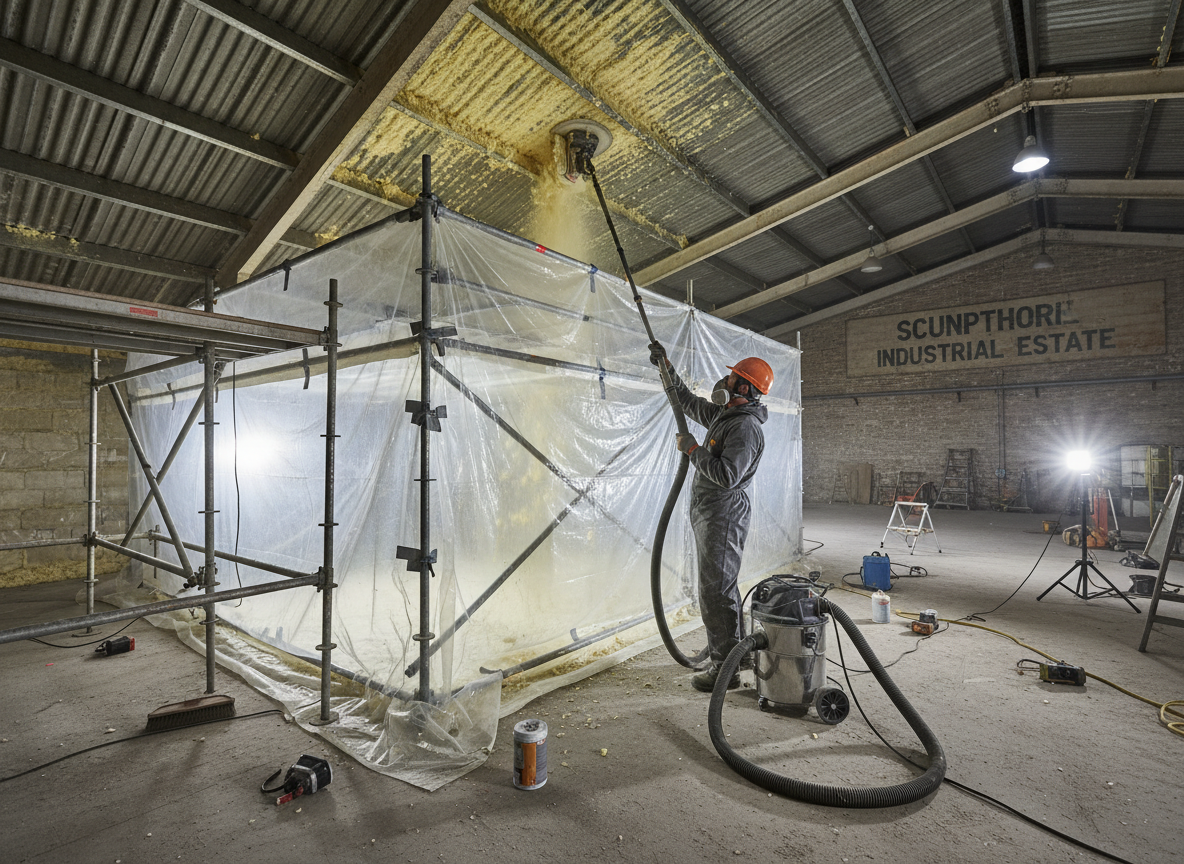
Commercial spray foam removal in Scunthorpe often involves thicker closed-cell applications installed decades ago in steelworks-adjacent warehouses and factories. These installations frequently bond directly to corrugated metal decks and concrete beams, requiring controlled mechanical scraping and vacuum extraction rather than simple pulling. Dust containment becomes critical because older foam can release isocyanates and fire-retardant particles when disturbed, especially in buildings that pre-date current COSHH regulations.
North Lincolnshire weather adds another layer. Frequent damp winters and high humidity around the Humber estuary mean foam in unheated commercial roof voids often traps moisture against timber joists. Removal crews must inspect for rot and metal corrosion before extraction, then ventilate the space properly to prevent immediate re-wetting. Gunness and nearby industrial estates see this pattern repeatedly because many units were built in the 1970s and 1980s with minimal roof ventilation.
Waste handling follows strict Environment Agency rules for Scunthorpe sites. Removed foam is bagged on-site, weighed, and taken to licensed facilities rather than general skips. Larger jobs around the A18 corridor often need traffic management plans because articulated lorries and shift-change traffic make daytime access difficult. Night or weekend scheduling is common to keep businesses operating.
Technician insight
In Scunthorpe the thing that catches most people out with Commercial Spray Foam Removal is how 1970s and 1980s industrial units along the A18 corridor often have foam sprayed straight onto steel purlins that have already started to rust from estuary damp; once you start pulling it you uncover hidden corrosion that changes the whole job.
Warehouse Roof Void, Gunness
Thick closed-cell foam in a 1980s warehouse near the A18 had trapped moisture against the steel deck for years. We found active corrosion on several purlins once the foam was lifted. Extraction was done over two night shifts with full containment, followed by rust treatment and documentation for the site manager.
How it works
- 1
Site Assessment
Walk the commercial roof void or ceiling space to measure foam depth, check substrate condition and identify access points from the A18 Doncaster Rd base.
- 2
Containment Setup
Install negative-pressure tents, floor protection and sealed chutes to keep dust and debris inside the work area during removal.
- 3
Foam Extraction
Use mechanical scrapers and industrial vacuums to remove foam in layers, separating it from metal, concrete or timber without damaging the structure.
- 4
Clearance and Disposal
Inspect for remaining residue, clean surfaces, then bag and transport waste to licensed facilities with full paperwork.
Pricing
Cost depends on foam thickness, roof access difficulty and waste volume; 24/7 availability allows flexible scheduling for commercial sites.