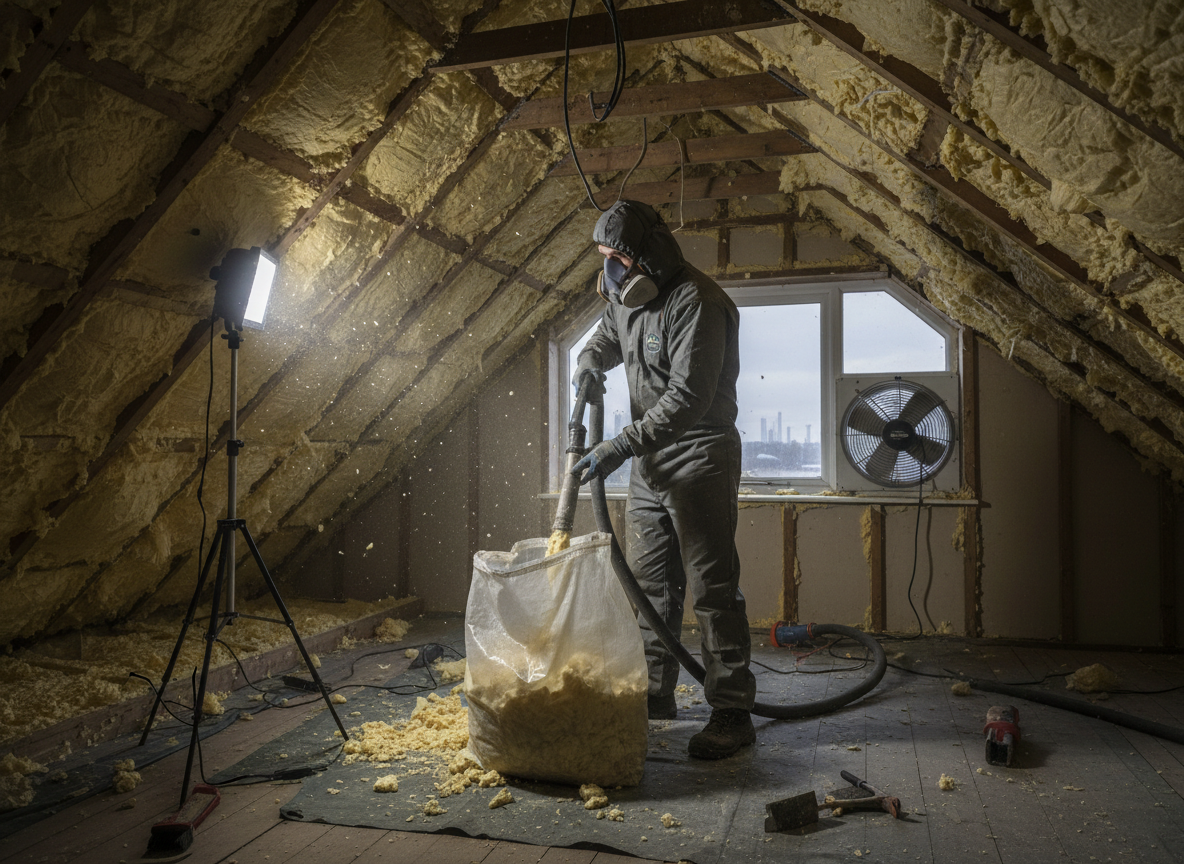
Scunthorpe's older terraced and semi-detached housing stock from the 1930s through 1960s often features tight roof voids with limited access hatches and original lath ceilings. Removing closed-cell spray foam in these spaces requires careful mechanical scraping and negative-air machines to avoid disturbing asbestos-containing materials common in post-war builds along roads like the A18. Winter temperatures in North Lincolnshire frequently drop below freezing, making the foam more brittle and easier to fracture into small particles that can migrate into living spaces if containment fails.
Homeowners in areas such as Crosby and Ashby frequently discover foam was applied directly over existing insulation or onto rafters without vapour control, leading to trapped moisture and timber decay once the material ages. Extraction crews must first map electrical cables and pipework hidden beneath the foam layer, then work in sections to prevent ceiling collapse in properties with narrow joist spacing typical of the region. Dust extraction and HEPA filtration are essential because Scunthorpe's flat terrain and prevailing winds can carry fine particles across neighbouring gardens if not fully contained.
After removal, ventilation must be restored to match current building standards for pitched roofs in Lincolnshire, often requiring new soffit and ridge vents that were blocked during the original installation. Crews also check for water ingress points around chimneys and valleys that become apparent only once the foam is gone. Final inspection includes moisture readings on rafters to confirm the loft is dry before any new insulation is considered.
Technician insight
In Scunthorpe, the thing that catches most people out with Attic spray foam removal is how often foam was sprayed straight onto the original lath and plaster in 1950s terraced houses along the A18 corridor; one wrong scrape and the ceiling comes down because the plaster keys have already been compromised by the foam expansion.
Crosby Semi-Detached Loft
Homeowner in Crosby reported musty smells and ceiling staining after years of closed-cell foam. Inspection revealed moisture trapped against rafters in a 1960s semi with blocked eaves. We removed the foam in sections using contained extraction, restored ridge ventilation, and confirmed dry timber before leaving the loft clear and ventilated.
How it works
- 1
Site Assessment
Measure attic access, note joist condition, and identify hidden services in Scunthorpe properties.
- 2
Containment Setup
Install negative air and floor-to-ceiling plastic barriers to protect living areas below.
- 3
Foam Extraction
Use mechanical scrapers and vacuum systems to remove foam in controlled sections without damaging ceilings.
- 4
Clearance and Ventilation Check
Remove all debris, take moisture readings, and confirm restored airflow before handover.
Pricing
Pricing depends on attic size, foam thickness, access difficulty, and whether additional timber treatment is required.